

Tuesday, February 19, 2013

A Few (more) of my Favorite Things

A few weeks ago, I posted about some of my favorite things.  Needless to say, that was only just the beginning!  I am constantly in awe of the amazing resources that other teachers have found, so I'd like to share some more of the things that keep me a sane and happy teacher.  

Book Retriever App
This app was so worth the $0.99 I paid for it!  Over the summer, I was able to catalog my entire classroom library by scanning the barcodes on each book using the camera on my phone.  My.  Mind.  Was.  Blown.  Not only does it keep track of your books alphabetically, but it also levels them (DRA, AR, Lexile, etc.), which means I can easily check a reading level by scanning the barcode.  It also has options for inputting student lists and parent contact info so that you are able to check books out to students (and alert their parents if a book goes missing), but I have yet to play with this feature.  If you knew how many times I've stood staring at the endless shelves in Barnes & Nobel wondering if I did in fact already have a book I was considering buying, you would also know how handy this app has been for me. 
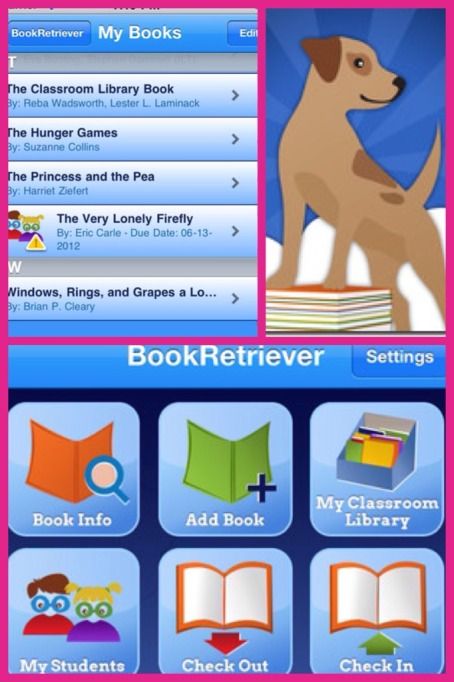
 photo ED89E4CF-5416-4852-80C7-B3DBEFB3DAE4-14563-000007274E5A7D66.jpg

Teachers Pay Teachers
This is a no-brainer, and I'm sure any teacher nowadays would agree that TPT is on the top of many of our favorite thing lists.  My love for TPT is two-fold: I have found TONS of high quality, cute, creative resources to use with my class, and it has provided me with a (small) second source of income.  My students have loved each and every activity, and I appreciate not having to create everything myself...because there is no way I am that creative!!   
 photo B7282FF9-3321-46E8-93F5-6E9063FEAFA4-14563-000007274F6586F9.jpg

Donors Choose
We all know how much money teachers fork over from their own pockets to supplement their own classroom.  From supplies, to books, to technology and more, it all adds up so quickly.  Our students are like our own children, and we want to give them the world, but unfortunately, we cannot always afford to provide everything we would like.  That's where Donors Choose comes in.  Teachers can create a project by selecting items through their online mall, write a rationale for potential donors, and post up their project on the DC website.  Friends, family, corporations, and even complete strangers can make tax-deductible donations to help fund your classroom project.  Many large companies (like Kia, Horace Mann, Sonic, etc.) offer match opportunities where they will automatically fund half of your project costs.  Over the past two years, I have been fortunate enough to have had four projects fully funded on DonorsChoose.org. I've received math centers, science supplies, and most recently, five Google Chromebooks!  It is definitely worth a shot to help supplement some of the costs associated with loving your students!
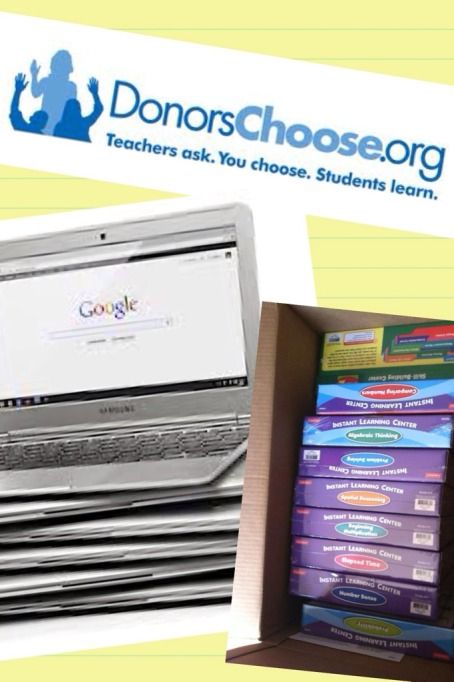
 photo 0B7D0A53-C7AD-4CDB-8643-5A536675FAF3-14563-000007275067904D.jpg
So again, I have to ask...what are some of your favorite things?  Apps your students love?  Sites you frequent?  Products that make your world go round?  Share away!

Friday, February 15, 2013

The Distributive Property

A few years ago, I never would have imagined spending months and months developing and building upon multiplication concepts, but that is exactly what I feel like we have done this year.  We've moved through multiplication as equal groups, repeated addition, arrays, skip-counting, area models, and partial products, and we aren't done yet.  It's been a big investment, but I don't regret a single minute of it, because I am seeing major growth in my students. 

The Common Core says that third graders are expected to be able to "apply properties of operations to multiply and divide", which includes the Distributive Property (3.OA.B.5).  The idea of the distributive property is HUGE in developing a deep conceptual understanding of multiplication for kids, but if you are anything like me, you didn't "learn" the Distributive Property until middle school (FOIL, anyone?).  What might this look like in 3rd grade?!  So the following is my experience introducing distributive property to 8 and 9 year old kiddos.  

We developed a context for this idea through area problems, which seemed like a natural starting point.  I created rectangular "brownie pans" with tape on each of my tables with various dimensions.  One of the important pieces in getting students to think about and eventually use the Distributive Property is creating a need to break apart your factors, so I intentionally made the dimensions of the "brownie pans" large enough to do just that.  I posed the following problem, and let them get to work:  

"Your busy teacher was asked to bake brownies bites for an upcoming bake sale.  Because she is so busy, she only has time to bake one batch of brownies.  She needs your help in deciding which cookie sheet to use that will allow her to make the most brownie bites in a single batch.  Use everything you know about finding area to figure out how many 1-square inch brownie bites she can make if she uses the baking sheet outlined on your desk.  As we know, things don’t always turn out how we expect them to, so be ready for anything!  Attend to precision, and be prepared to share your findings with the class!"


Five of six groups began tiling their rectangle almost immediately, as tiling to find area is one method that students had been exposed to.  After spending five minutes furiously tiling their area, it quickly became apparent that counting their tiles, or even repeatedly adding their rows or columns, would not be an efficient way to find the total area.  Thankfully, they also had been exposed to an area model for multiplication, so multiplying it would be...if they only knew what to do with these big numbers.  The final group measured their dimensions with a yardstick, and were immediately stuck with two numbers too large to multiply using strategies they had previously learned.  This "stuckness" was exactly what I was hoping for, because it created a need to try something new.

As I made my way from group to group, I heard numerous, "I don't know how to skip count by 19's!!" and "We haven't learned how to multiply big numbers yet!".  But I also heard, "Ok, let's cut the pan in half, and you do that side, and we will figure out this side", and "Let's take out the 10 x10 piece, because that's 100 brownies, then we can solve what is left".  Problem solvers in action!  Not all groups were so logical in the ways in which they broke-apart their area, so I had to be mindful in questioning students to get them to think about meaningful ways to break-apart their dimensions (landmark numbers, tens, fives, etc.).  

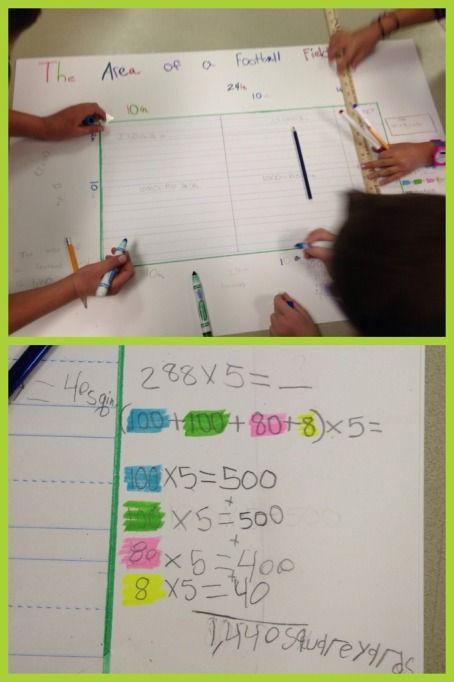
Students used rulers to "cut" the brownies into chunks, post-it notes to keep track of the area of each part, and worked together to present their findings on their recording sheet.  All groups had a chance to share their work, and we discussed the ways in which they chose to break-apart their large area or dimensions into smaller pieces.  We also talked about how this idea of taking large factors and decomposing them into smaller parts, multiplying, then adding all the parts back together, can be used to multiply bigger numbers.  

We have since used the Distributive Property time and time again in many different instances, most recently in finding the area of a football field.  
 photo AFF6BD5F-D02C-47CC-9664-C20603A3995B-14563-000007274B277B45.jpg


     So there you have it, my experience introducing 3rd graders to the Distributive Property. The DP is a huge concept, and this lesson just scratched the surface.  I am very pleased with how my students responded to that scratch.

Happy Weekend!

Thursday, January 31, 2013

Superbowl Fun Friday and Freebie!

Each year, right before the Superbowl, my class seems to fall into the 3rd quarter "slump".  They've been back from Winter break for several weeks, and it seems like DECADES before Spring Break.  Pair that with the all-to-frequent, too cold for recess days, and you have a recipe for some antsy kiddos! 

Around this time of year, I will do anything to keep them motivated, and "Superbowl Fun Friday" has helped me with this mission.  In the weeks leading up to the Superbowl, I begin to drop hints about his fun-filled day, and of course, their curiosity is peaked.  It's always nice to have something to look forward to, so come Friday, my students are usually very excited!

Now, it's important to remember that I am in the trenches.  I know how important and crucial every day of instruction is for my students at this point of the year.  So my secret is...Superbowl Fun Friday is really just academic concepts that we are learning about anyway, just with football themes.  Friday is also my day with no pull-outs or specials, so we have plenty of time to accomplish all that we need to accomplish.

Fun Friday starts with each group deciding on their team name.  Throughout the day, I award points to teams who complete activities, show good sportsmanship, and work together as a team.  This year, our day will consist of football themed multi-step word problems (Operations and Algebraic Thinking, anyone?) and using the Distributive Property to determine the area of a football field in math, and football-themed reading, including a book by one of my favorite players (Peyton, not Eli):   
 

In the afternoon, we play a quick round of "Superbowl Quiz Game", which is just a Powerpoint I created.  I've played many ways, but I've found that two big teams actually works well because many of the questions take some schema that not all of my students have.  If I'm feeling crazy, I might even take in some football themed treats.  

Because it's almost the weekend, and more importantly, because you read this far, you can get your very own "Superbowl Quiz Game" for free here in my TPT store.  Thanks for reading, and have a great weekend!


Wednesday, January 23, 2013

A few of my favorite things...part 1

Just like our students, no two teachers are alike.  Because of that, I LOVE to talk to my teacher friends about their classrooms, their students, what they are reading, what they are doing, all of it.  Most of all, I love to hear about their favorite things because I usually walk away excited and ready to try something new.  So in the spirit of sharing, here are just three (of 392,948,002) of my favorite classroom things.     

1.  Math.
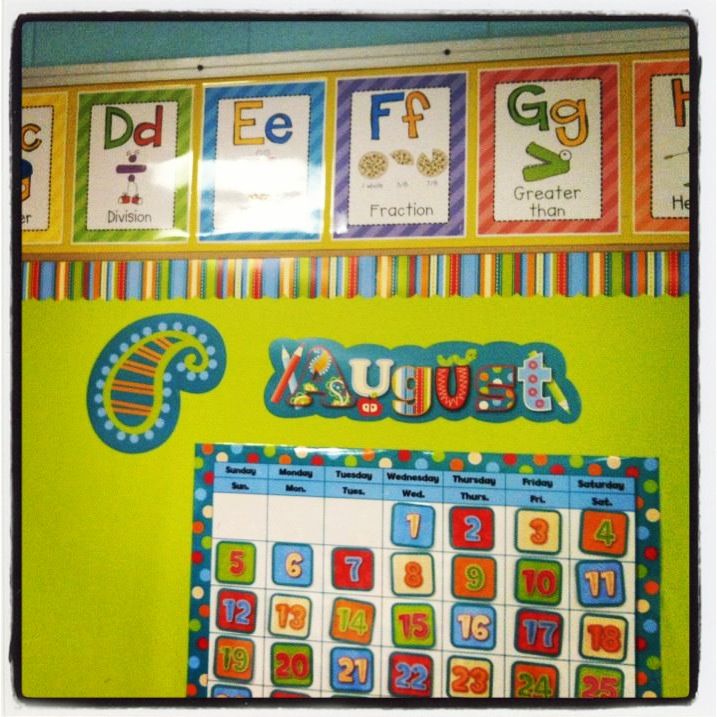
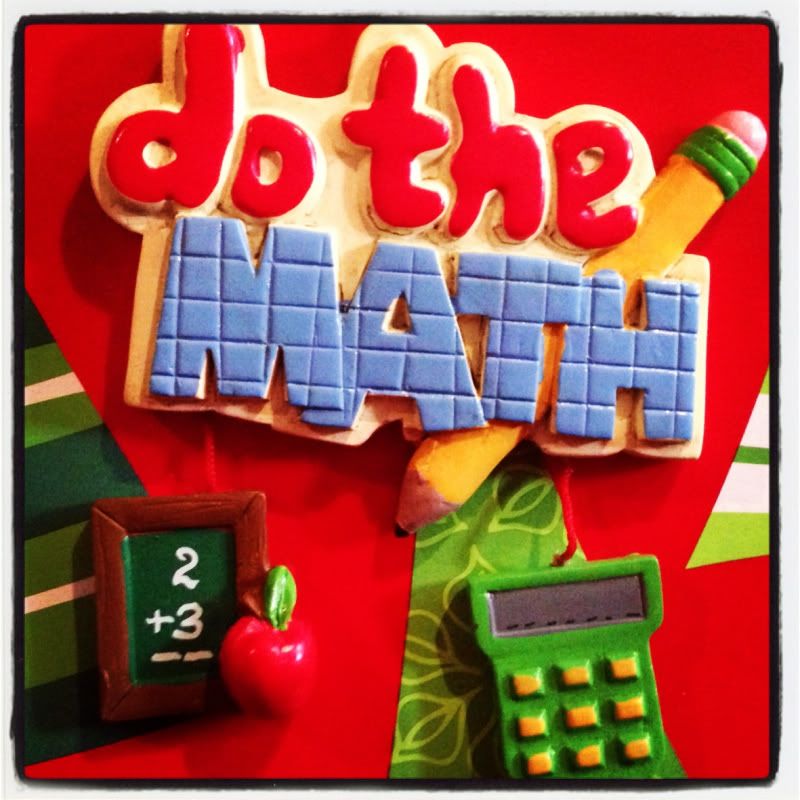
It took me a LONG time to get to this point, but I can now say that I love all things math.  Teaching math, designing math tasks for my kiddos, math PD, math trinkets, talking math...everything! A wise friend once said that math is the great equalizer, and that really resonated with me.  Students who do not fear math are also not afraid to pursue higher education and job opportunities that are math-intensive.  Because of this, I surround my students with math, and make every effort to help them connect math to the world around them. 
 photo 0408e0f35320b183d19a26a522b73a07.jpg

 photo 4fcabeeeb7d846a6ab0a19720e4e738e.jpg
https://mail-attachment.googleusercontent.com/attachment/u/0/?ui=2&ik=c50aaa3c09&view=att&th=13c658099fabb1b5&attid=0.1&disp=inline&safe=1&zw&saduie=AG9B_P-tfwD_tC-2iaVS9ycb1Zh7&sadet=1358912618097&sads=6z-6pYx0_9b0irDg6EZEE7x824g
Geometry Toms.  I may or may not also have red Calculus Toms.

2. Organization
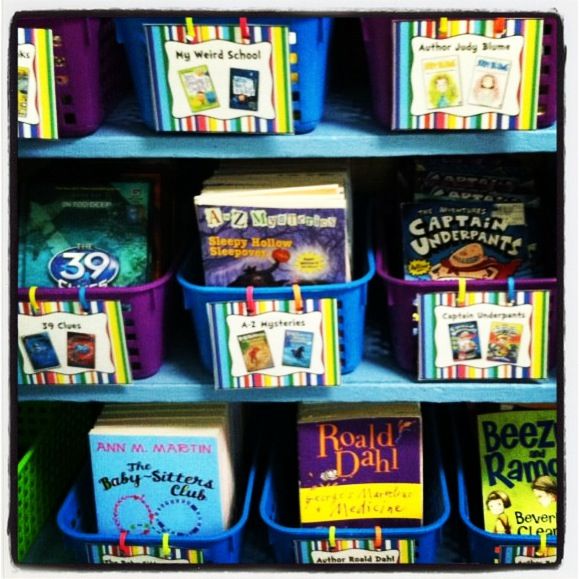
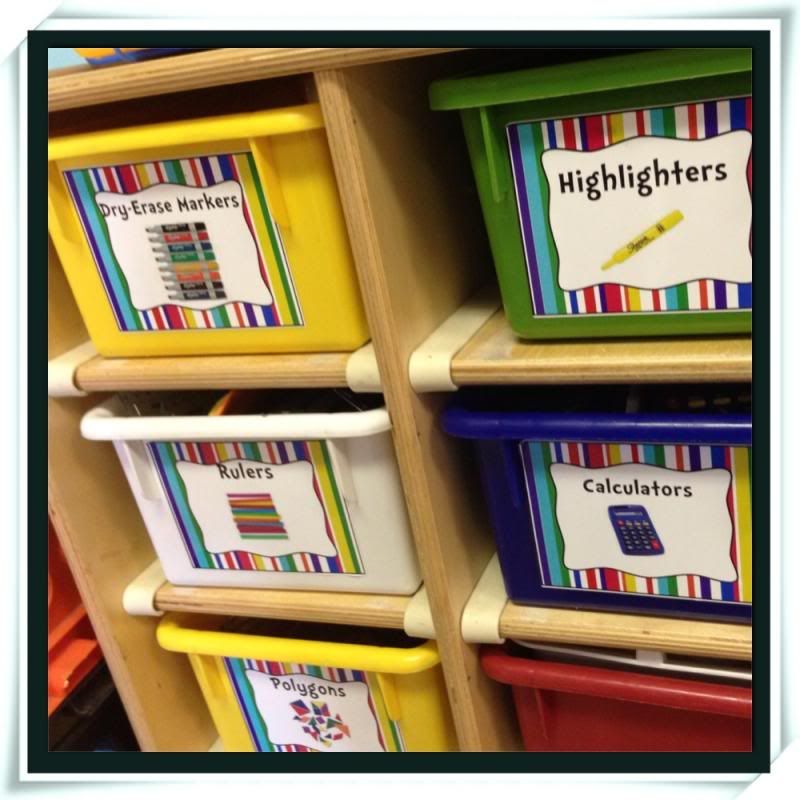
What can I say?  I love to see things in their place.  I wish I could say that my home was as organized as my classroom, but if I said that, I would be a liar!  But I have invested lots of time into organizing my classroom, which has been time well spent.  My classroom library is organized by series or author, which cuts down on the amount of time students spend browsing so they can get to reading.  This also makes for putting books back where they belong super simple.  Supply tubs have similar labels so students have easy access to resources so they can use them as needed.  However, I should also note that I live in the real world of teaching kids, which means that sometimes, the only thing organized in my classroom is the chaos!          

 photo 17e9705badd23b38e9444423e884dc25.jpg

 photo photo9.jpg
3. Tales of a Fourth Grade Nothing, by Judy Blume, and Clementine, by Sara Pennypacker
 These are two of my absolute favorite books to read aloud to my students.  Both of these books have characters and situations that most (if not all) of my students can relate to, a good balance of humor and seriousness, and always manage to spark an interest in even my most picky readers.  Both are the first book in a series, so once I've managed to hook them in with the read aloud, they have options for independent reading.  Plus, they are highly entertaining for me, no matter how many times I've read them! 

https://mail-attachment.googleusercontent.com/attachment/u/0/?ui=2&ik=c50aaa3c09&view=att&th=13c658aa56ee277d&attid=0.1&disp=inline&safe=1&zw&saduie=AG9B_P-tfwD_tC-2iaVS9ycb1Zh7&sadet=1358913280447&sads=6px-h_IcfuwHXbbX5h1E7secElU

What are some of your favorite things?  I'd love to hear all about them in the comments below!

Thursday, January 17, 2013

Half-way through 3rd Grade


Last week, as we returned to school from Winter Break, we took some time to look back at what all we've accomplished during the first half of the school year before we set our goals for the second half.  I always expect the "big" 3rd grade milestones to be mentioned (field trips, starting multiplication), but when I asked my students, "What do you remember most about 3rd grade so far?", here is some of what they said:


 "Classroom visitors!"

A real, live Mathematician!
Learning about recycling with Libby!
Libby, the recycling dog!


"Watching the Space Shuttle fly over our school!"

Space Shuttle Endeavour fly-over
   
"Pumpkin Investigations!"


Sink or Float

Bowling with Pumpkins!

"Snowflake!"
 

A visit from an Elf!


 "Santa Math!"

Santa's new workshop

"Collecting Pajamas for kids in need!"

176 pairs collected!


I'll be the first to admit, this time of year can be so stressful for teachers because you think of ALL that you have left to do and accomplish in order for your students to be prepared for the next grade.  For me, taking time to reflect on all that we have done and what means most to my kiddos helps to keep me grounded. 

What were some big milestones from the first half of your school year?

Monday, January 14, 2013

Mathy Monday! And a GIVE-AWAY!

I've always been honest with those around me about my "relationship" with math.  We used to be enemies, but now we're very close. In fact, we are so close, I allow math to spend much of the day in my classroom, alongside my students.  We're practically B.F.F's.

With that said, my views on teaching math are constantly evolving, and I think any teacher implementing the Common Core Standards can probably relate to this.  As I make my way through the Common Core, one third grade standard  in particular really sticks with me:

3.OA.C. 7 Fluently multiply and divide within 100, using strategies such as the relationship between multiplication and division (e.g., knowing that 8 × 5 = 40, one knows 40 ÷ 5 = 8) or properties of operations. By the end of Grade 3, know from memory all products of two one-digit numbers.

The underlined part is what gives me the biggest pause, I am now responsible for determining if a student is proficient at memorizing facts!  I CRIED over memorizing multiplication facts when I was a kid!  REAL TEARS!!!!!!! 

Now, we've spent months developing our conceptual understanding of multiplication and division, as we should have, it's a critical area in 3rd grade.  I fully understand that knowing multiplication facts from memory helps students solve more difficult problems down the road.  I had to memorize facts as a kid (remember, tears?!).  But as a teacher, I've never been one to focus on "answer production", and in all honesty...I've never required my students to formally prove that they know their multiplication facts.

Instead, I have always addressed computational fluency through games- card games, dice games, array games, computer games, etc.  And so far, no tears from the students (or me).         

So my wondering is...how do you address computational fluency at your grade level?  What activities work well for your students?  Do you have a "no-tears" approach for math facts?!

Now for the give away!  For surviving Monday, I will give the first 3 people to leave a comment my "Multiplication Boot Camp" packet from Teacher's Pay Teachers.  It has 12 of my favorite "games" for practicing math facts, quick fact assessments, a progress tracking sheet, and a homework log.  You can find more info here: http://www.teacherspayteachers.com/Product/Multiplication-Boot-Camp-Grade-3
Just leave your email in the comment box and I will send it to you!

Good luck!


Sunday, January 13, 2013

Welcome!

Well, I guess it's time to hold my breath and jump in!  I've been toying with the idea of starting a teaching blog for quite some time now, mostly because I wanted some way to remember and document this huge part of my life.  As parents, we know how quickly it all goes by...but the same can be said for teachers!  Proving this point, my students just returned from Winter Break, and several are quickly approaching my height!  Every day is something new, hilarious, and amazing, and I am excited to share that.

I hope to also share some of our day-to-day 3rd grade happenings, as well as what I'm working on, teaching ideas and products I love, and a freebie now and then!  Feel free to chime in with your own comments, thoughts and ideas, I'd love to hear them all!  Thanks for joining me!